Sanity CMS consultancy
Multi-tenant architecture, internationalization, schema construction, Media Library, and codebase audits - hourly, one decision at a time. Sanity is one of the two CMS platforms I run in production day to day at Bejamas, alongside Storyblok - see General CMS consultancy for the platform-agnostic version of this review.
Custom quote
- A multi-tenant dataset architecture read: one dataset with a region or tenant field versus one dataset per market, weighed against your editor count and query patterns.
- A schema construction review before you lock in a content model - document types, reference structures, and where a section should be reusable versus one-off.
- A codebase audit - Studio configuration, GROQ query shape, and frontend integration - before you commit to a larger engagement.
Experience
Dataset-architecture and schema calls, reviewed for your project by the hour.
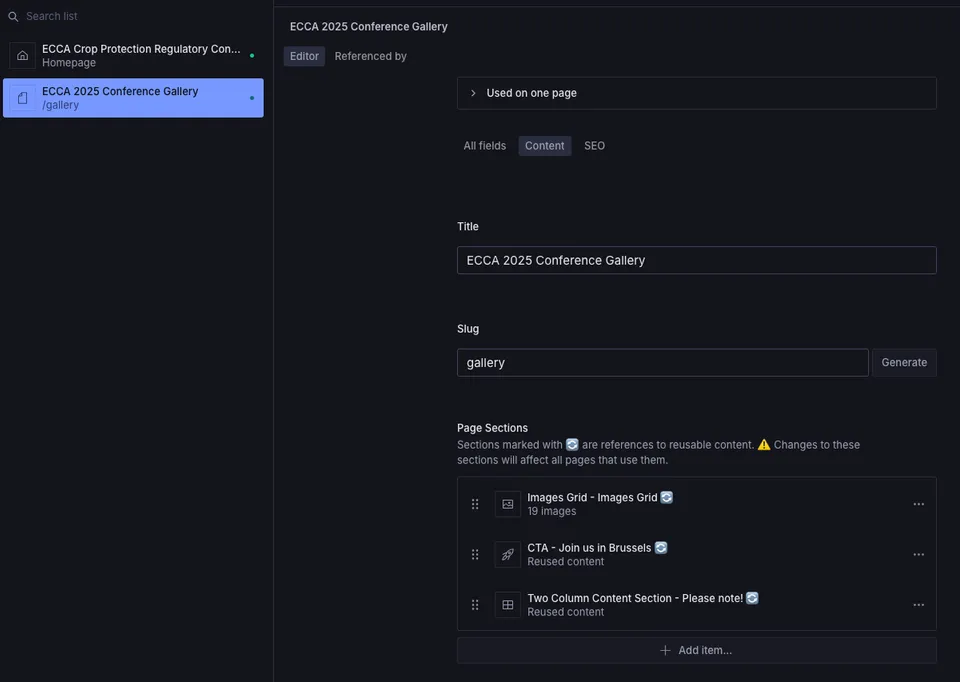
What a schema review actually looks at
On the ECCA conference platform, the images grid, the call-to-action, and the two-column section shown here are reusable Sanity blocks, not one-off fields - Studio itself flags when an edit to one will ripple across every page that reuses it. That is the kind of schema-construction call this page reviews before you lock one in.
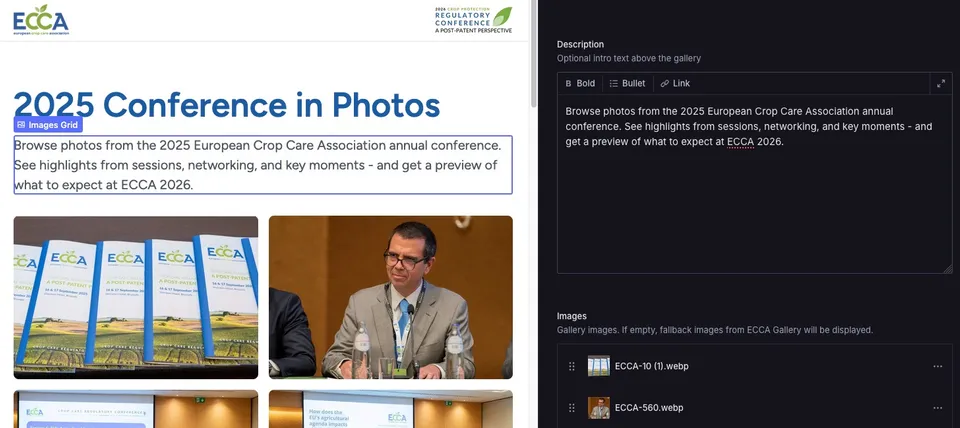
Where a Sanity audit actually looks
On the same project, Visual Editing wires the live gallery page to the exact fields producing it - the description and image list shown here. A codebase audit checks wiring like this: whether the GROQ query actually matches what Visual Editing expects, and whether Studio configuration and frontend integration still line up, before you commit to a larger engagement.
FAQ
Questions, answered
What does this cover?
Multi-tenant dataset architecture - one dataset with a region or tenant field versus one dataset per market - the document-level-versus-field-level internationalization call, and schema construction before a content model locks in. It also covers whether Sanity's Media Library enterprise add-on is worth adopting, and a codebase audit of Studio configuration, GROQ usage, and frontend integration before you commit to a larger engagement.
What does this not cover?
General CMS architecture, migration planning, or a rendering-performance pass that isn't Sanity-specific. That's General CMS consultancy - or Storyblok CMS consultancy if Storyblok is the platform in question. And if you need a Sanity-powered site built from scratch, that's AI-editable websites with a CMS, scoped as a fixed-price project.
In practice
How a Sanity review runs
Send me the decision
The multi-tenant question, the internationalization structure, the schema you're constructing, the Media Library question, or the codebase you want audited. One paragraph and read access to the project is enough to start.
I read the project before I quote
I go through the dataset structure, the document types, and - for an audit - the Studio configuration and frontend integration, then give you a fixed hour estimate. No retainer running in the background.
You get it in writing
Which dataset shape and internationalization approach fit your team, what to change in the schema, whether Media Library is worth adopting, or the audit findings. Written down, so it survives the call.
Sanity CMS consultancy
Custom quote
- A multi-tenant dataset architecture read: one dataset with a region or tenant field versus one dataset per market, weighed against your editor count and query patterns.
- A document-level versus field-level internationalization call for your schema, weighed against your translation workflow and how often locales diverge in structure.
- A schema construction review before you lock in a content model - document types, reference structures, and where a section should be reusable versus one-off.
- A read on whether Sanity's Media Library enterprise add-on fits your asset volume, or whether the default asset pipeline still covers you.
- A codebase audit - Studio configuration, GROQ query shape, and frontend integration - before you commit to a larger engagement.
Get in touch